
The best school events do more than fill a date on the calendar. They create moments students remember and give families a reason to feel more connected to school life.
But coming up with an event that people actually want to attend isn't always easy. The right idea depends on your students and what you want the event to achieve.
Whether you're planning a small afternoon activity or a large school celebration, here are 10 school event ideas that can work for students, families, teachers, and communities.
School Talent Show
A talent show is one of the most flexible school events because almost any student can find a way to participate.
Singing and dancing may be the obvious choices, but students can also perform comedy, magic, poetry, music, gymnastics, storytelling, or other creative skills.
The event can be as simple as an afternoon performance in the school auditorium or turned into a larger evening event where families purchase tickets and attend together.
To make the experience feel more special, schools can publish a program with the performers, schedule, and event information before the show.
Tip: Give students plenty of time to sign up and consider holding short auditions or rehearsals before the main event.
Family Movie Night
Sometimes the simplest school events are the most popular.
A family movie night gives parents, students, and teachers an opportunity to spend time together without requiring an elaborate program.
Schools can host the event in an auditorium, gym, cafeteria, playground, or sports field. Add popcorn, drinks, snacks, blankets, and comfortable seating to make the evening feel less like school and more like a community gathering.
You can also let students vote on the movie beforehand, turning the planning process into part of the event.
Depending on the school and the event format, admission can be free or tickets can be sold to support a school project or organization.
Tip: Make all the practical information easy to find before the event, including start time, location, what families should bring, and whether registration is required.
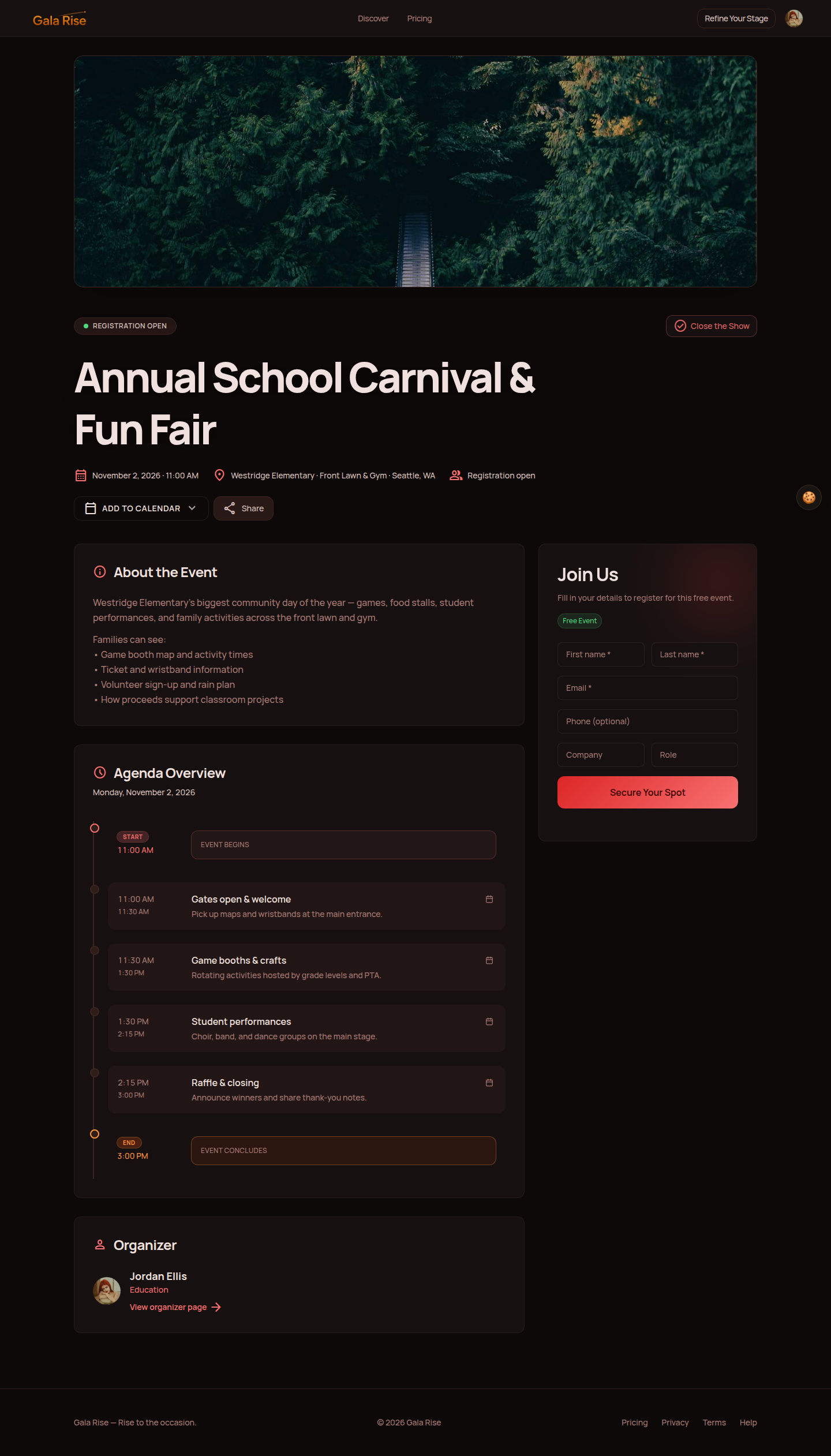
School Carnival or Fun Fair
A school carnival can become one of the biggest community events of the year.
Set up different stations around the school with games, food, music, activities, raffles, competitions, and student performances. Teachers, parents, student groups, and local organizations can each take responsibility for a different part of the event.
For younger students, activities might include face painting, ring toss, crafts, and simple games. For older students, you could add competitions, photo booths, live music, food stalls, or challenges between classes.
Because a carnival includes many activities happening at once, organization becomes especially important. Families should be able to quickly understand what is happening, where it is happening, and when.
Tip: Create a simple event map or schedule so visitors know where to go instead of relying only on signs at the venue.
Student Art Exhibition
Turn hallways, classrooms, libraries, or common areas into a temporary gallery.
A student art exhibition gives students a chance to share work they have created throughout the semester or school year. Drawings, paintings, photography, sculpture, digital art, design projects, and multimedia work can all be included.
The exhibition can also extend beyond visual art. Consider combining it with poetry readings, short performances, music, or student presentations.
Families can walk through the exhibition at their own pace, while students get an opportunity to explain the ideas behind their work.
Tip: Give students small labels or cards where they can add the title of their work and a short explanation of what inspired it.
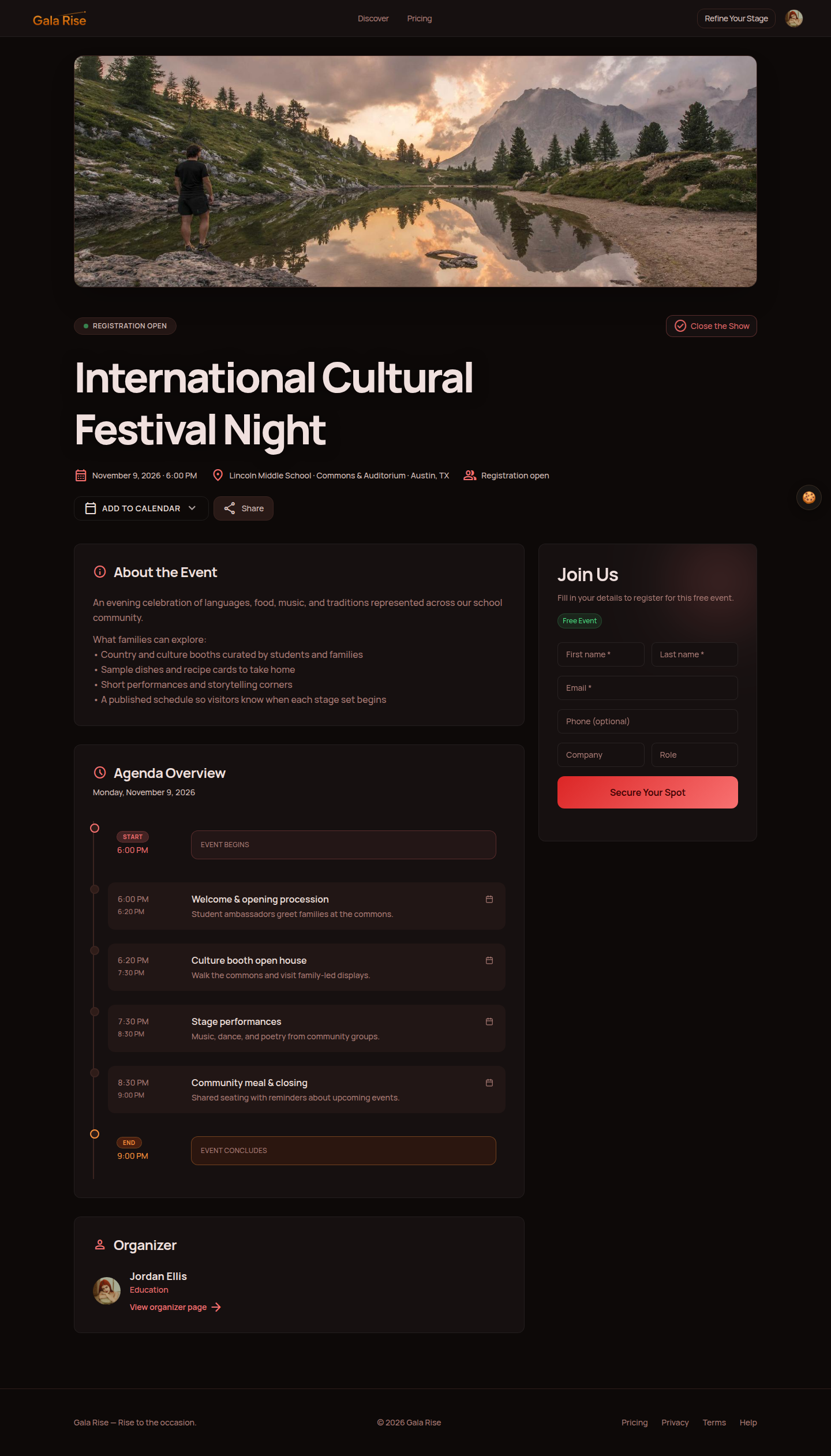
Cultural Festival
A cultural festival can celebrate the different backgrounds, traditions, languages, food, music, and stories represented within a school community.
Students and families can create booths representing different countries or cultures, share traditional foods, perform music and dances, tell stories, or teach simple activities to other attendees.
The goal should be participation and learning rather than turning cultures into costumes or stereotypes. Inviting families to help shape the event can make the experience more authentic and meaningful.
Larger cultural festivals may include dozens of activities and performances, so publishing an agenda in advance can help visitors decide what they want to see.
Tip: Ask families and community members to contribute ideas early in the planning process rather than designing the entire event internally.
School Trivia Night
Trivia nights are easy to adapt for different age groups and can work particularly well as a student and family event.
Participants form teams and compete through several rounds of questions. Categories could include science, history, music, movies, sports, school history, local trivia, or questions created by students themselves.
You can also include a special round with students competing against teachers or give each grade its own competition.
For fundraising events, teams could pay a small registration fee to participate, with prizes donated by local businesses or school partners.
The key is keeping the questions varied enough that different members of each team have opportunities to contribute.
Tip: Let students help write one of the trivia rounds. It gives them ownership of the event and usually produces some of the most entertaining questions.
Student Showcase Night
Not every student wants to perform on a stage.
A student showcase gives students a broader way to demonstrate what they have been learning and creating throughout the year.
Different classrooms or areas of the school can feature science experiments, robotics projects, writing, history projects, coding demonstrations, business ideas, art, videos, presentations, or other student work.
Families move through the school and explore projects at their own pace.
For larger showcases, schools can create an agenda with presentation times, project locations, speakers, and special sessions. That makes the event easier for families to navigate.
Tip: Encourage students to explain their projects themselves rather than simply displaying finished work.
Field Day
Field day gets students out of the classroom and creates a school event centered around movement, teamwork, and friendly competition.
Activities don't have to be complicated. Relay races, obstacle courses, tug of war, team challenges, water games, and simple sports competitions can all work.
Students can compete by classroom, grade, house, or randomly assigned teams.
For a more community focused event, schools can invite families to watch or create a few activities where parents and teachers participate alongside students.
Because field days often involve several groups rotating through different activities, a clear schedule is essential.
Tip: Build backup options into the plan in case weather changes or outdoor activities need to be moved.
Online School Event
Not every school event needs to happen in a gym, auditorium, or classroom.
Online school events can make it easier for families, alumni, guest speakers, and community members to participate regardless of where they are.
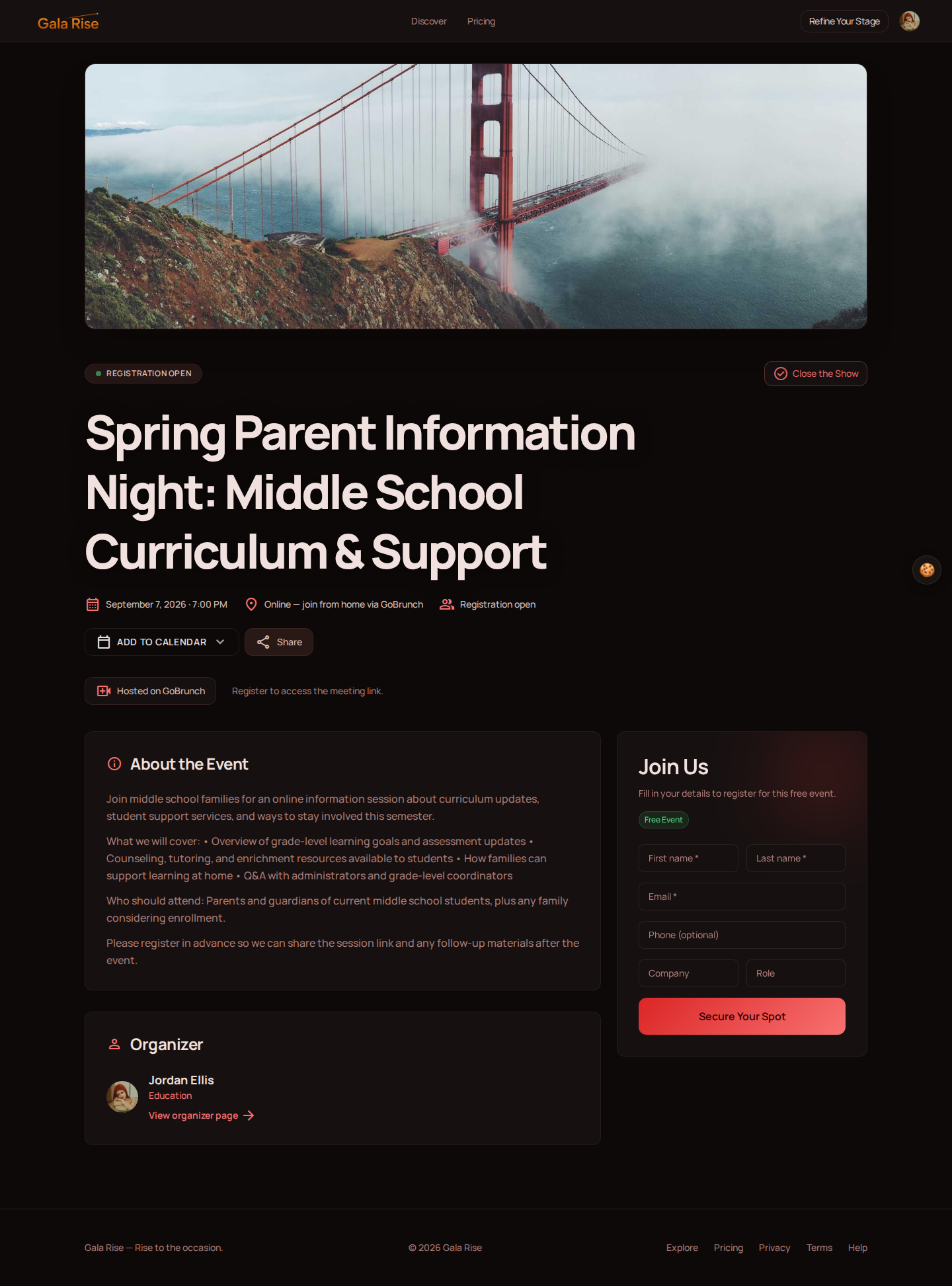
Schools can organize virtual workshops, parent information sessions, student presentations, guest lectures, online award ceremonies, academic showcases, webinars, alumni conversations, or live streamed performances.
Online events can also complement an in person event. A school might stream a presentation for relatives who cannot attend, make a session available afterward, or create an online space where attendees can access the agenda and event materials.
For these events, the technology should make participation simpler rather than adding more steps.
Instead of sending families separate links for registration, payment, the event schedule, virtual rooms, and recordings, schools can use Gala Rise to organize the event experience in one place. Gala Rise supports event pages, registrations, tickets, agendas, live content, and replays. Its GoBrunch integration can automatically create a virtual room sized for the audience, giving registered guests one clear place to join when the session goes live.
This can be particularly useful for events with several sessions, or when a school wants students and families to return to the same event environment before, during, and after the event.
Tip: Keep the experience simple. Attendees should know exactly where to register, where to join the event, and where to find recordings or resources afterward.
End of Year Celebration
The end of the school year deserves more than a final bell.
An end of year celebration gives students, teachers, and families a moment to recognize what happened during the year and celebrate it together.
Depending on the age group, this could be a picnic, party, awards ceremony, outdoor festival, student performance, graduation style celebration, or combination of several activities.
You might recognize student achievements, thank volunteers, showcase memorable projects, share photos from the year, and invite teachers or students to speak.
Tip: Focus on memories and participation rather than creating too many awards. The event should feel like a celebration of the community, not only of a small group of students.
How to Choose the Right School Event
With so many possible school event ideas, choosing the right one is often harder than generating the ideas themselves.
Start with one question:
What do you want this event to accomplish?
If the goal is family engagement, something accessible like a movie night, carnival, or cultural festival may work well.
If you want students to demonstrate what they have learned, consider a student showcase or exhibition.
If you're raising money, choose an event people would be happy to attend first and add the fundraising component second.
A few other questions can help narrow the options:
- Who is the event for?
- How many people could attend?
- Will the event be free or paid?
- Does it need registration?
- Will families participate or only students?
- How many volunteers will be needed?
- Does the school have the right venue?
- Is there a backup plan?
- Could an online format make the event more accessible?
The best school event isn't necessarily the biggest one. It's the event that fits your community and gives people a good reason to participate.
A Simple School Event Planning Checklist
Once you've chosen the idea, the next challenge is turning it into an actual event.
-
Define the purpose Be clear about why you're organizing the event and what success would look like.
-
Choose a date and venue Check the school calendar for conflicts and make sure the venue fits the expected audience and activities.
-
Organize the essential information Make sure families can easily find the event date, location, schedule, registration details, and anything they need to bring.
-
Open registration if necessary If you need to know how many people are attending, give families enough time to register before the event.
-
Publish the schedule For events with several activities, performances, speakers, or locations, give attendees an agenda before they arrive.
-
Promote the event Use the communication channels families already pay attention to, such as email, school newsletters, social media, classroom communication, and parent groups.
-
Send important updates Remind attendees of the date and share anything they need to know before arriving.
-
Prepare for the day Make sure volunteers, teachers, students, and other organizers understand their roles and know where they need to be.
-
Share what happens afterward Photos, resources, student work, and event highlights can extend the value of an event beyond the day itself.
How to Get More People to Attend School Events
A good idea doesn't guarantee good attendance.
One of the most important things a school can do is make the event easy to understand.
Families should be able to answer the essential questions quickly:
What is it? Who is it for? When is it? Where is it? Do I need to register? Does it cost anything? What will happen when I get there?
Then give people a reason to care.
Instead of promoting a generic “School Community Evening,” explain what they will experience:
“See more than 40 student projects, watch live robotics demonstrations, and meet the students behind the work.”
Specific events are easier to imagine and easier to say yes to.
Finally, reduce friction. Make registration details easy to find, communicate the schedule clearly, and avoid making families search through several old messages to understand how the event works.
Every extra step is another opportunity for someone to give up.
Frequently Asked Questions About School Events
What are school events?
School events are organized activities that bring students, families, teachers, or the wider school community together outside normal classroom lessons. They can be educational, social, cultural, athletic, fundraising, or online.
What are some good school event ideas?
Popular school event ideas include talent shows, family movie nights, school carnivals, art exhibitions, cultural festivals, trivia nights, student showcases, field days, online events, and end of year celebrations.
How can schools get more people to attend events?
Make the event easy to understand, clearly communicate who it is for and what attendees will experience, promote it through channels families already use, and reduce unnecessary steps in the registration or attendance process.
Can school events be held online?
Yes. Schools can organize online workshops, parent sessions, student presentations, guest lectures, webinars, award ceremonies, and hybrid events for people who cannot attend in person.
School Events Are About More Than the Event
A talent show, carnival, trivia night, online event, or student exhibition may only last a few hours.
But the value of school events is often what happens around them.
Students get opportunities to participate outside their normal lessons. Parents see a different side of school life. Teachers interact with families in a more informal setting. And the school creates shared experiences that people remember.
You don't need dozens of different ideas to create a great school calendar.
Start with one event that fits your community, organize it well, and make it easy for people to participate.